SWAT: Search efforts were underway to trace a person who went missing after a glacier burst incident in Upper Swat’s Kalam Valley, Rescue 1122 said on Saturday.
Six others were injured in the incident that took place in Kalam’s Matiltan area a couple of days ago. The glacier burst was reported once the survivors returned to the main Kalam bazaar.
A man, identified as Syed Ali Shah, a resident of Khwazakhela, remained missing. According to his companions, he is believed to have died. However, his body has not yet been recovered.
Rahimullah, one of the expedition members, told Dawn that Shah was a local guide who was accompanying the team of six. He said dangerous conditions amid a snowstorm had compelled them to leave Shah’s body at the site.
Upper Swat Deputy Commissioner Sohail Khan told Dawn that the district administration had coordinated with all relevant departments and formally requested helicopter support and other professional assistance from the competent authorities.
“I have also invited members of the Alpine Club of Pakistan to discuss the safest and quickest way to recover the body,” DC Sohail said.
Initial reports indicated that three injured individuals received first aid from the Rescue 1122 medical team before being transferred from the Kalam Tehsil Headquarters Hospital to Central Hospital in Saidu Sharif for further treatment.
Three other people sustained minor injuries and were reported to be safe.
Expedition member recalls incident
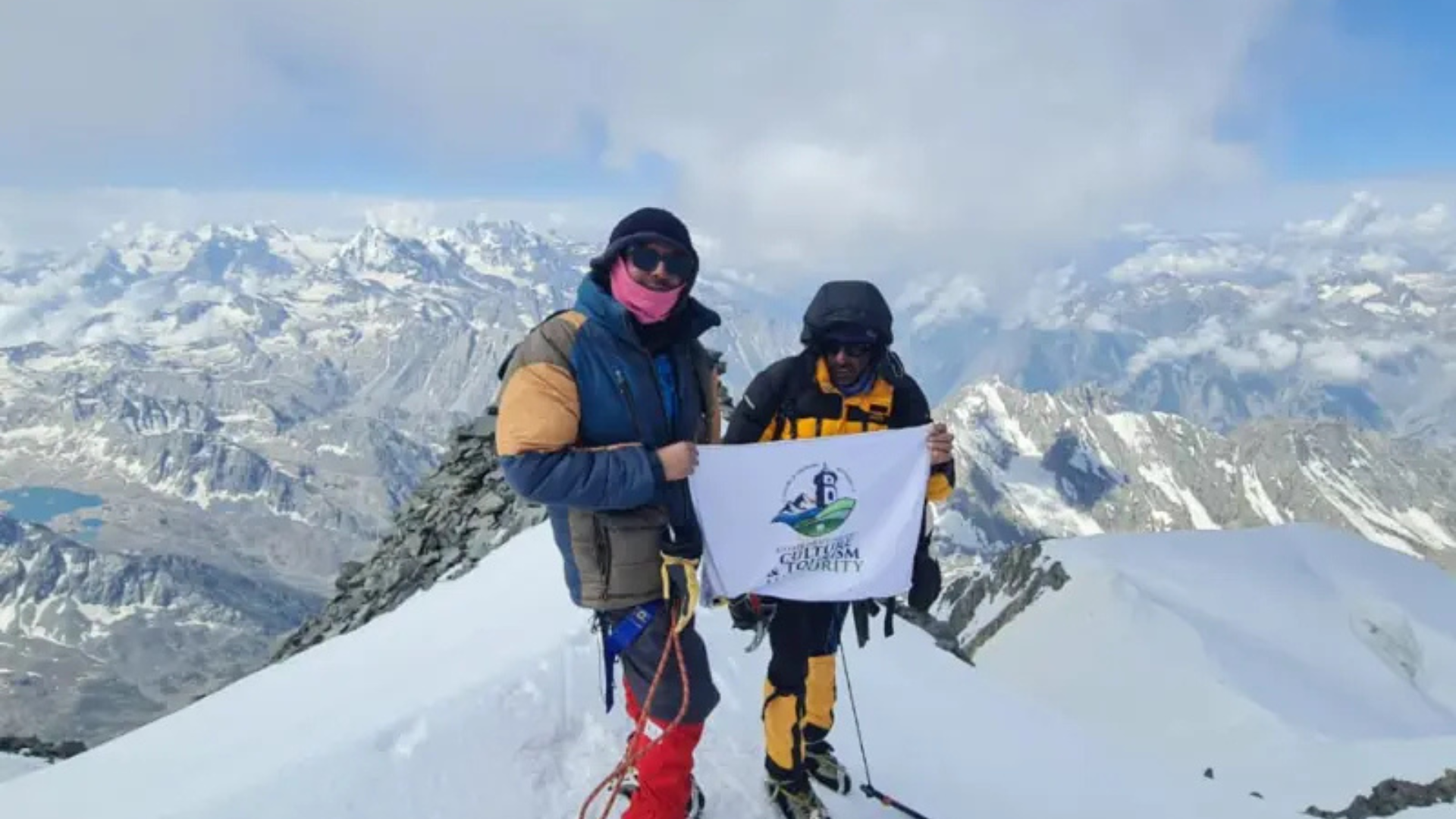
Rahimullah, an expedition member from Swat, told Dawn that the team comprised six mountaineers — three from Rawalpindi, one from Mardan, and two from Swat.
“We started our trek on July 5 and successfully summited Falak Sar peak on July 9, where we spent the night,” he said. Falak Sar (5,985 metres) is the highest peak of the Hindukush mountain range in Swat.
“On July 10, while descending, our local guide, Syed Ali Shah, slipped and fell into a steep gully below the ridge of the peak,” he recalled.
Rahimullah said the team managed to reach him, but he had suffered a severe spinal injury and was completely paralysed.
“We spent the following day and night with him, trying to rescue him, but due to the lack of professional climbing and rescue equipment, it was impossible to evacuate him safely,” he said.
“The next morning, we were caught in a severe snowstorm, and Syed Ali Shah succumbed to his injuries.”
He said that another member of the expedition had also sustained serious injuries, forcing the team to prioritise evacuating the survivor.
“We had no option but to leave Syed Ali Shah’s body at the site while we rescued the injured climber. After an extremely difficult journey, we reached Kalam Bazaar on July 17,” he said.
According to Rahimullah, the body remains at an altitude of approximately 18,000 feet in an extremely dangerous location, making recovery impossible without specialised assistance.
“The body can only be retrieved through a helicopter operation supported by a professional high-altitude rescue team, preferably involving experienced mountaineers and rescuers from Skardu,” he said.
He appealed to the Khyber Pakhtunkhwa government to urgently arrange a helicopter and a professional rescue team to recover Shah’s body.
The northern areas of Gilgit-Baltistan and KP are vulnerable to events such as glaciers breaking off or glacial lake outburst floods (Glofs), which are accelerated by climate change.
In its outlook for the 2026 monsoon season, the Pakistan Meteorological Department (PMD) warned that above-normal temperatures may further accelerate snow and glacier melt, resulting in increased runoff and heightened risks of localised glacier-related hazards.
It further cautioned that warming conditions may increase the risk of Glofs, an outburst of water from a glacial lake which could lead to severe flooding downstream.
Pakistan is home to over 13,032 glaciers, the largest reservoir of glaciers outside of the polar regions. However, experts have warned that about 10,000 glaciers in Chitral and GB have been reported to be receding due to climate change-induced temperature rise.
Last month, the Space and Upper Atmosphere Research Commission (Suparco) identified 130 potentially dangerous glacial lakes (PGDLs) with possible risks to downstream settlements from Glofs.
Of the 130 identified glacial lakes considered potentially hazardous, only 24 are currently unfrozen and clearly observable.
In August 2025, at least 200 people were rescued after a glacier burst in GB, which blocked the Ghizer River and resulted in the formation of two lakes.