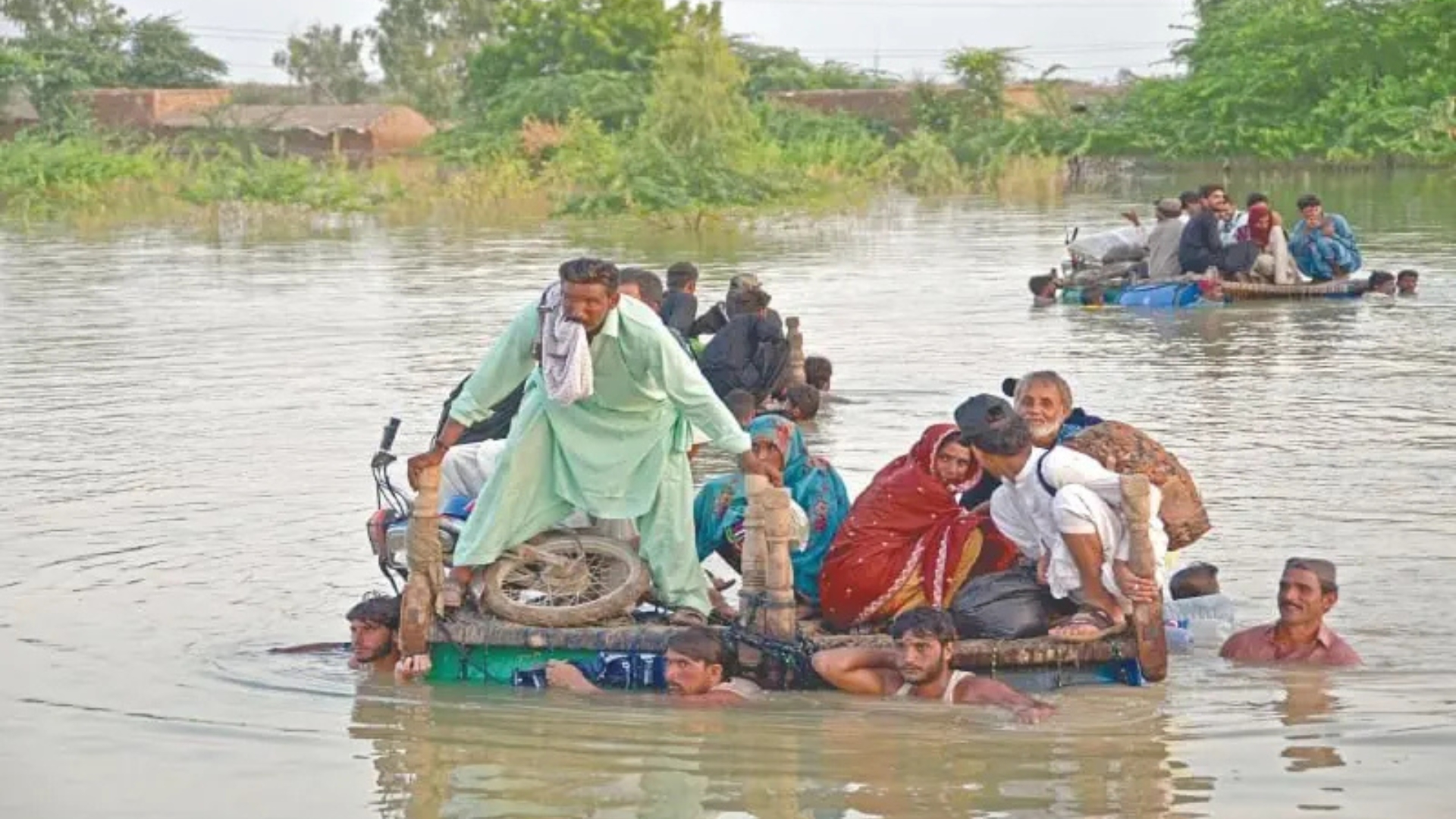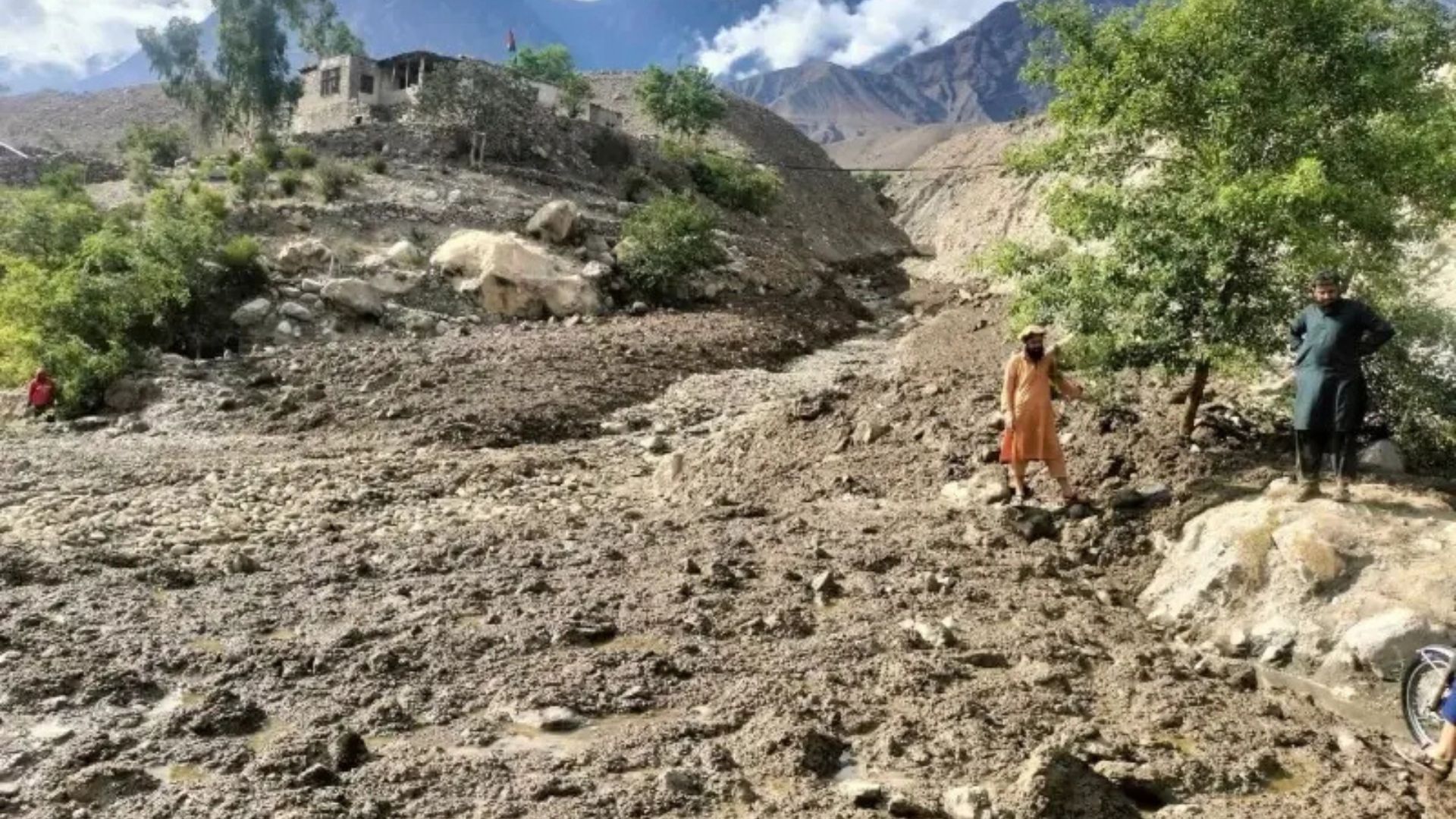
GILGIT: Climate change-induced disasters continued to batter Gilgit-Baltistan (GB) as flash floods triggered by heavy rainfall caused widespread destruction in various parts of Diamer district.
According to a statement issued by the Gilgit-Baltistan Disaster Management Authority (GBDMA), flash floods occurred at six locations in Diamer early on Monday.
The floods damaged several houses, the Karakoram Highway (KKH), link roads connecting remote areas, crops, agricultural land, and public and private property. Flooding was reported in Khanbari, Niyat, Thore, Gaspayan, Gasbala, Bunar and other areas.
Flood debris entered several houses, while agricultural land, standing crops and fruit trees were severely affected in the Thunraka area of Thore Valley. GBDMA officials said the main road in Thore Valley was washed away at several places, completely suspending traffic.
Power transmission lines were also damaged, disrupting electricity supply to Thore Valley and surrounding areas and causing difficulties for thousands of residents. Floodwaters also damaged link roads at several locations in the Niyat area of Chilas, leaving traffic suspended and severely affecting transportation for local communities.
Meanwhile, a devastating flash flood in Khanbari swept away two houses along with their contents, while several livestock were also washed away. A private company working on the Diamer-Bhasha Dam project suffered heavy losses after 13 dumpers, an excavator, a crushing plant and two water tankers were swept away by floodwaters, bringing development activities to a standstill.
The Karakoram Highway was blocked by landslides and debris at Bonar Das, resulting in long queues of vehicles on both sides of the road. Passengers, including domestic and foreign tourists, remained stranded for several hours. Although traffic on the KKH was later restored, link roads connecting remote areas remained blocked. Power supply had also not been restored in many affected areas.
Residents of the affected areas urged the Gilgit-Baltistan government, district administration, National Disaster Management Authority (NDMA), GBDMA and other relevant institutions to immediately launch relief operations, restore the KKH and other roads, resume power supply, and provide financial assistance to affected families.
Experts said GB is experiencing an unprecedented rise in climate change-induced disasters. Cloudbursts, flash floods, landslides and glacial lake outburst floods (GLOFs) are occurring with increasing frequency. Rising water levels in rivers and streams have threatened downstream communities, while mudflows have damaged roads, bridges, irrigation channels, water supply systems, crops, orchards and agricultural land.
River erosion has also damaged homes in Ghizer, Nagar, Shigar, Ghanche and other districts, displacing dozens of families and destroying property.
The NDMA’s National Emergency Operations Centre has issued alerts warning of landslides and potential Glofs. Residents across the region are also facing heatwaves, accelerated glacier melting and recurring landslides this summer, severely disrupting livelihoods.
Safdar Hussain, an environmental expert, told Dawn that the fragile ecosystem of Gilgit-Baltistan is increasingly under threat from climate change.
“Rising temperatures in recent years have accelerated glacier melting, leading to more frequent cloudbursts and glacial lake outburst flood events,” he said.
GB, home to around 8,400 glaciers and more than 4,000 glacial lakes, has witnessed rapid depletion of its ice cover, increasing the risk of Glofs and posing long-term threats to water security.
Officials said all necessary arrangements are in place to respond to any potential Glof emergency.